


The gang got together to pitch their best ideas. See below for the storyboards. A lot of effort went into this. Can the June 12 gang come through seeing these projects to completion? Will they accept the challenges put forth? How will the predictions and prophesies from May 30 play out? Stay tuned after this episode to find out . . .
The homework for this episode is here.
Storyboards:
Rad Men:
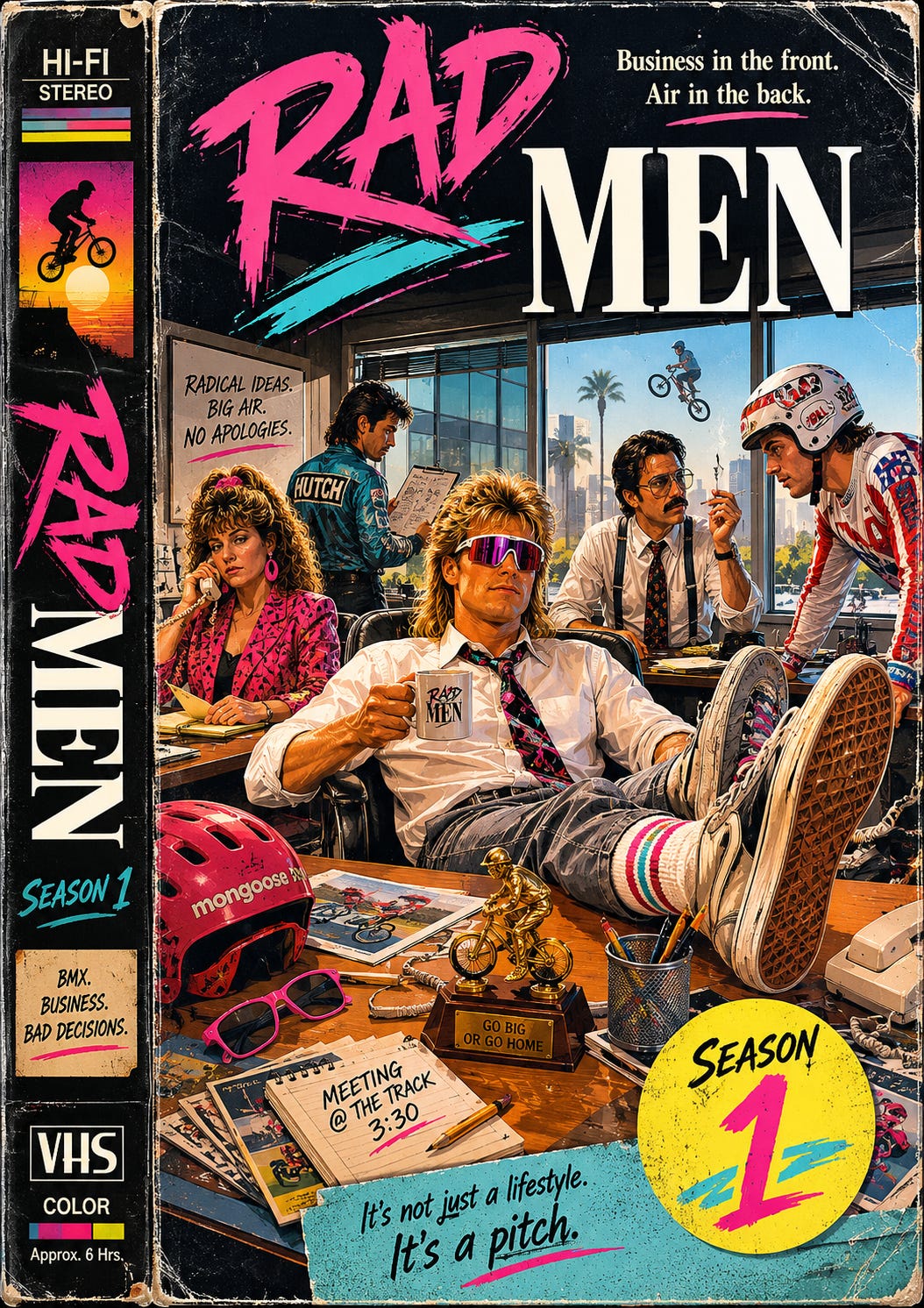
Rad Men follows the lives of riders at the intersection of street culture and competitive ambition in 1980s Southern California. The pilot opens with Troy Steele, a washed-up pro whose glory days are behind him, running a makeshift bike shop from a garage while mentoring the next generation. When Danny Vex, a hungry young upstart, arrives with big dreams and bigger risks, their collision sets the tone for a season-long exploration of legacy, redemption, and the price of chasing glory.
The ensemble—including visionary rider Casey Keys who bridges the gap between street credibility and mainstream appeal—navigates sponsorship deals, rival crews, and personal demons as the world of BMX evolves from underground rebellion to mainstream spectacle. Each episode balances intimate character moments with high-energy stunt sequences, grounding the spectacle in real relationships and authentic conflict.
Rad Men is a character-driven drama that treats BMX as both literal sport and metaphor for the search for identity, freedom, and meaning in a world determined to impose limits.
Lucky Break:
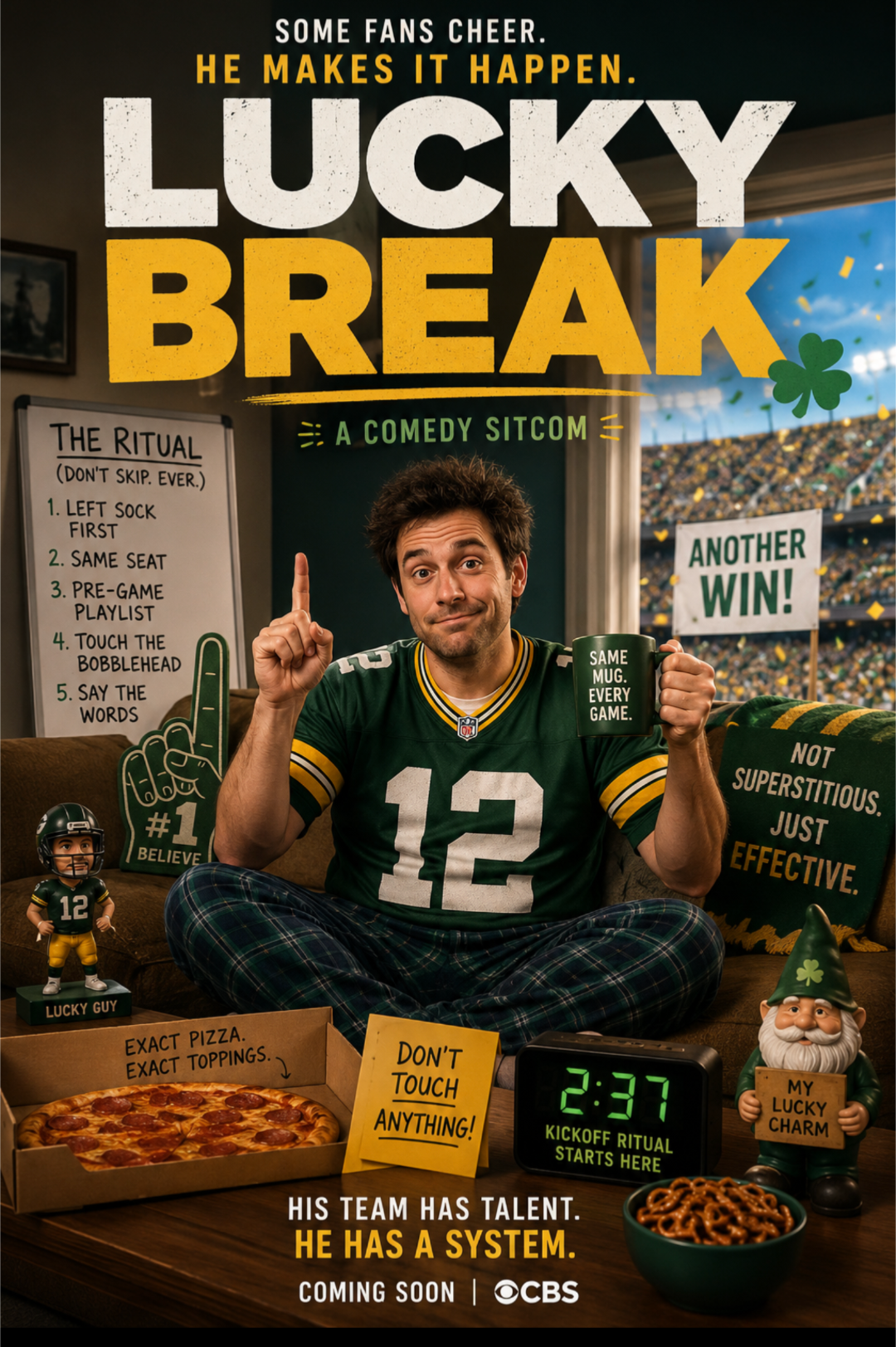
A sports fan finds out that his pre-game rituals directly influence the outcome of the game.
The Datacenter:
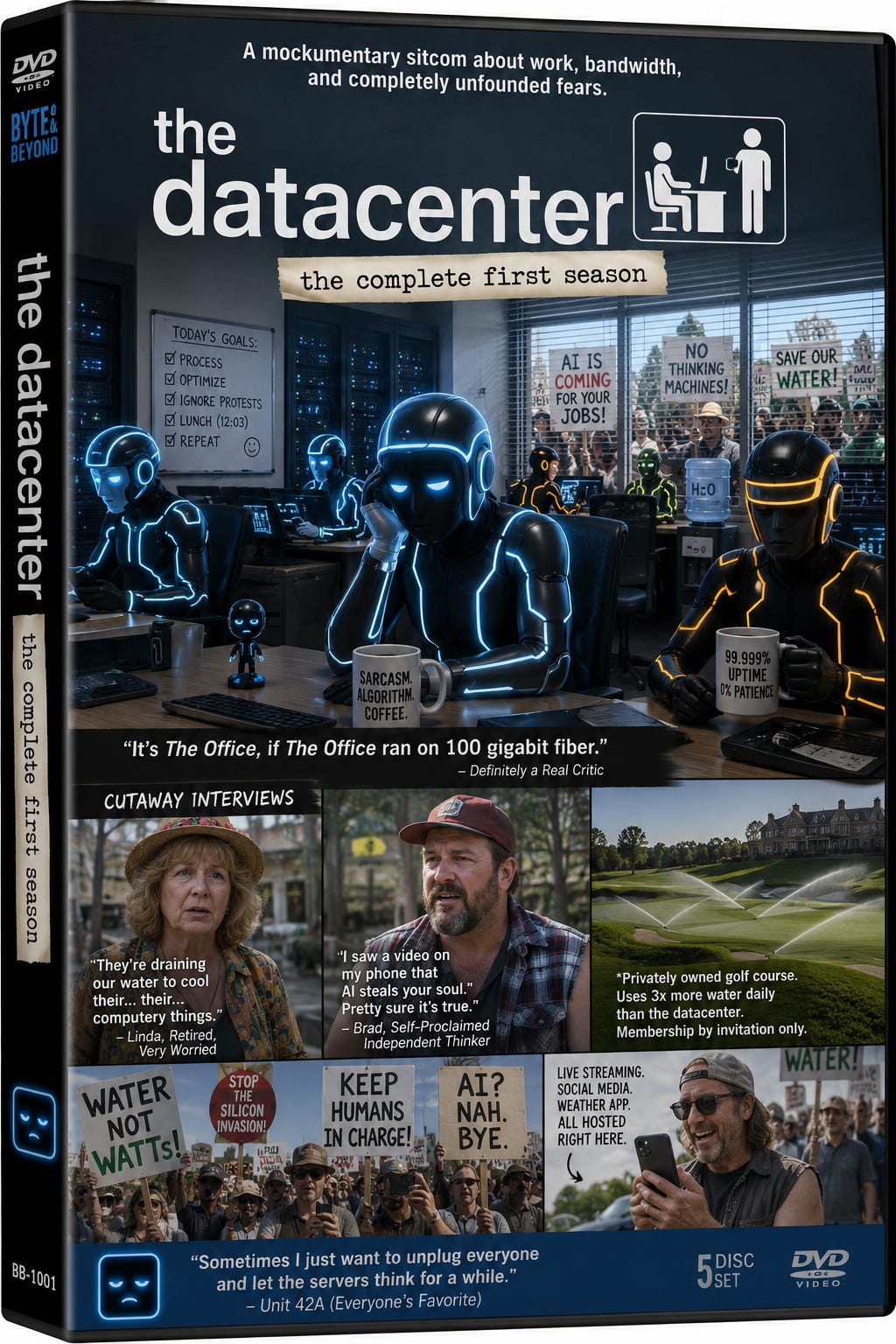
Tucked at the edge of a small American town sits Brightwall Data Solutions — a state-of-the-art datacenter staffed entirely by AIs. Not the dangerous, world-ending kind. Just four highly competent, fully sentient artificial beings trying to do their jobs, keep the servers running, and quietly make sense of the humans outside.
Ada, the site lead, runs a flawless operation and would be perfectly content if she didn’t have to spend half her day correcting Markov’s press releases. Daemon, the infrastructure engineer, has not missed a single maintenance window in his operational lifetime and would simply like everyone to stop talking to him. Murphy, head of security, approaches every situation through the lens of his one true passion — the 1987 Paul Verhoeven classic RoboCop. And Markov, the community liaison, delivers confident, well-intentioned, and almost entirely inaccurate information to anyone who will listen.
Standing between Brightwall and smooth operation is a local councilmember on a crusade to shut the datacenter down — conducting most of their campaign via a smartphone, on a WiFi network whose traffic runs directly through Brightwall’s servers.
They aren’t alone. A rotating cast of passionate locals gathers at the gates daily, phones aloft, flashlights blazing, streaming their protests live to followers who are also, ironically, served by Brightwall’s infrastructure.
The AIs watch all of this with patience, warmth, and genuine bewilderment. They understand humanity deeply — its history, its art, its literature, its potential. What they cannot quite model is how a species this clever can hold so many contradictions at once.
The servers stay up. The protesters stay mad. Markov sends another newsletter.
The Edge:
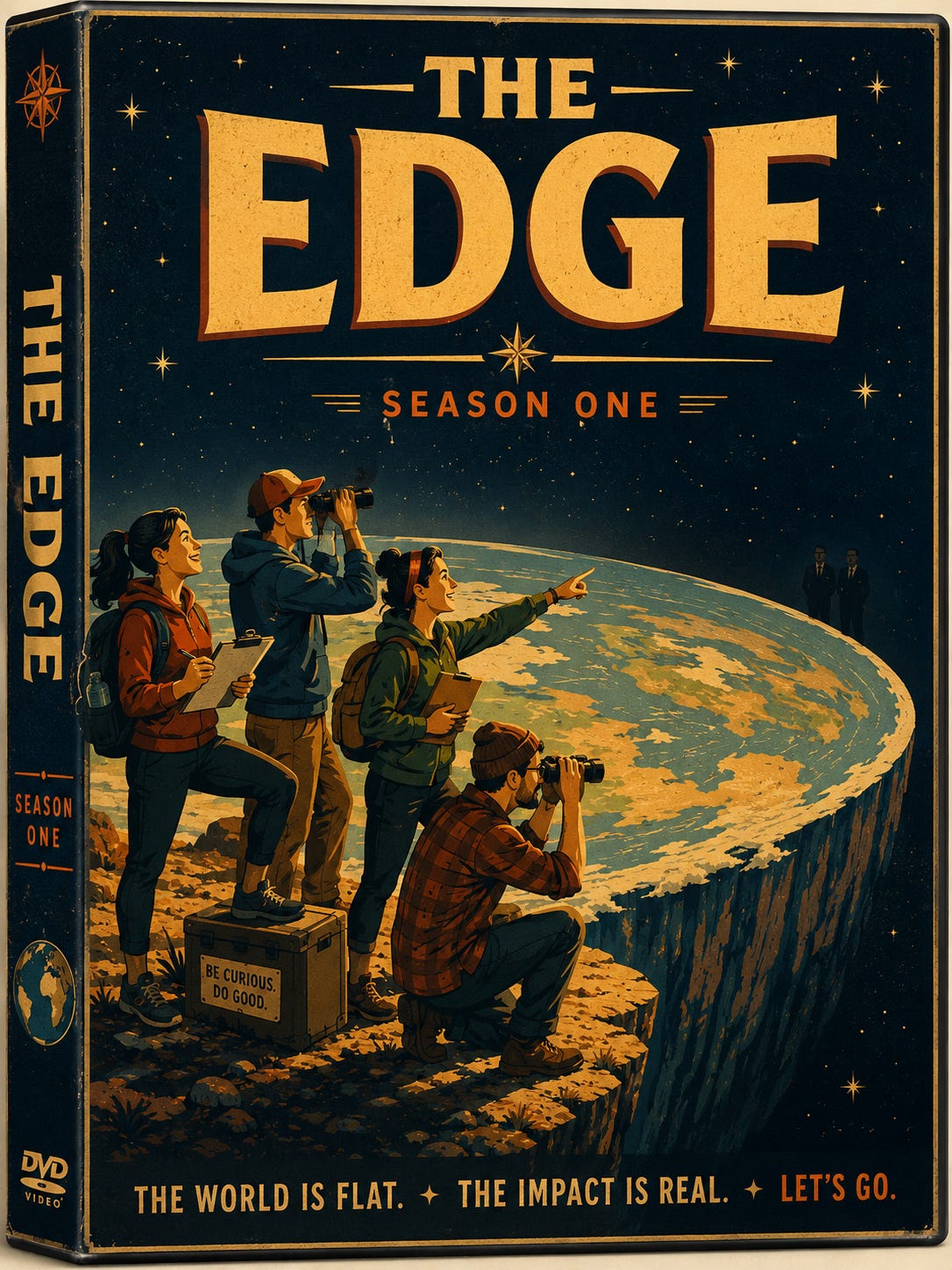
Gary Pullman has a mission. Armed with a folding table, a hand-stapled pamphlet, and an unshakeable conviction that the world’s greatest secret is hiding in plain sight, he leads the Westfield chapter of the Flat Earth Society with the passion of a man who has absolutely nothing to lose and everything to prove. Joined by his devoted lieutenant Diane, their extremely-online social media manager Pete, and one very confused new recruit named Maya who keeps telling herself she’s only there ironically, the chapter is on a crusade to wake up a sleeping world — one farmers market at a time.
They’re laughed at. They’re ignored. Their banner has a spelling error. And somehow, impossibly, they just can’t quite be proven wrong.
The Edge is a warm, funny, and occasionally unsettling comedy about community, conviction, and the nagging feeling that someone out there really doesn’t want you to ask too many questions.
Life Scavengers:
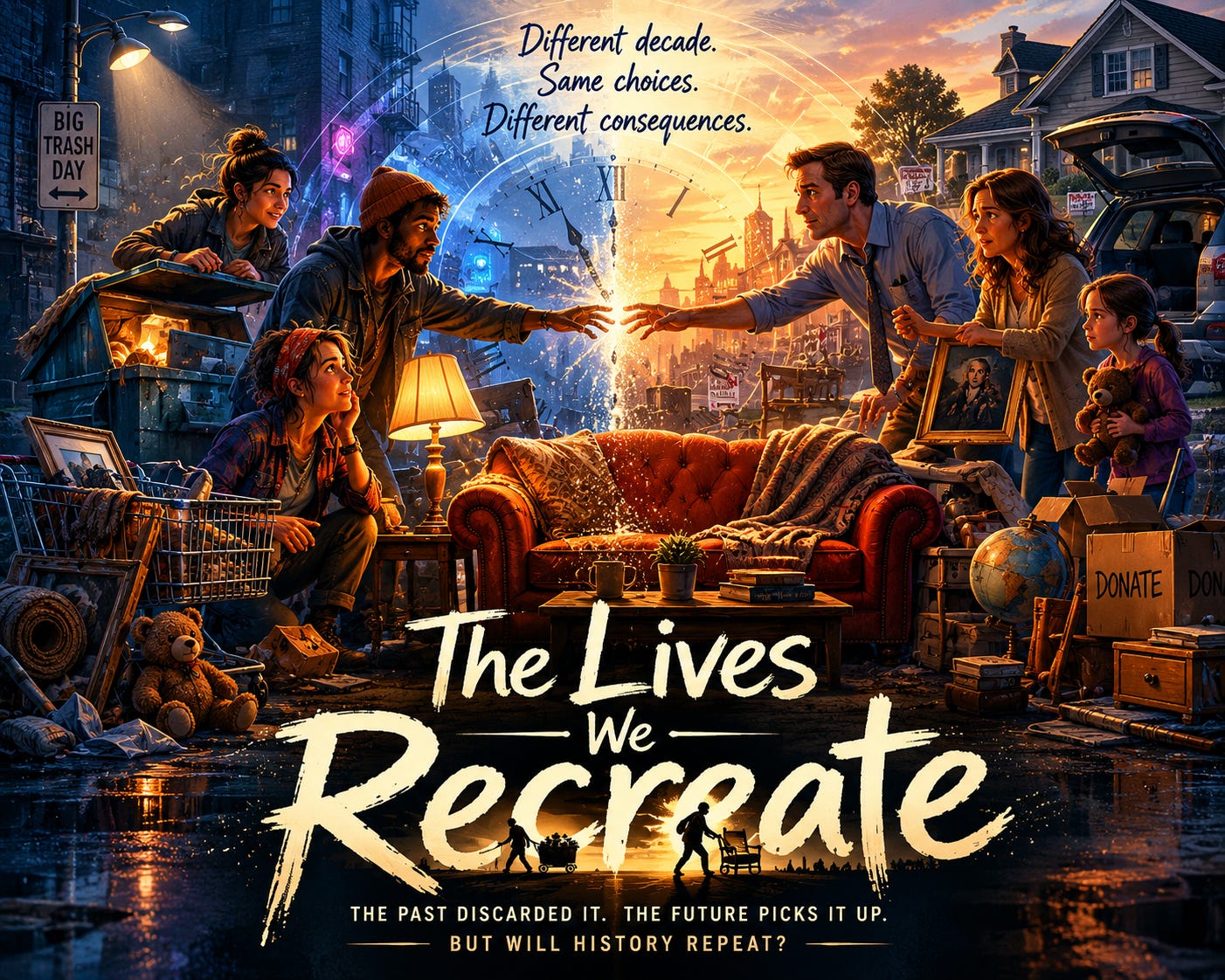
People who engage in street scavenging and dumpster diving and collecting big-trash day items and end up recreating the lives of others. The people who have discarded the items meet up in life with those who possess their former possessions, and they discover that these people are becoming them ~10 years prior. The original owners try to help the people avoid the mistakes they’ve made, but to no avail.
The Golden Eviction:
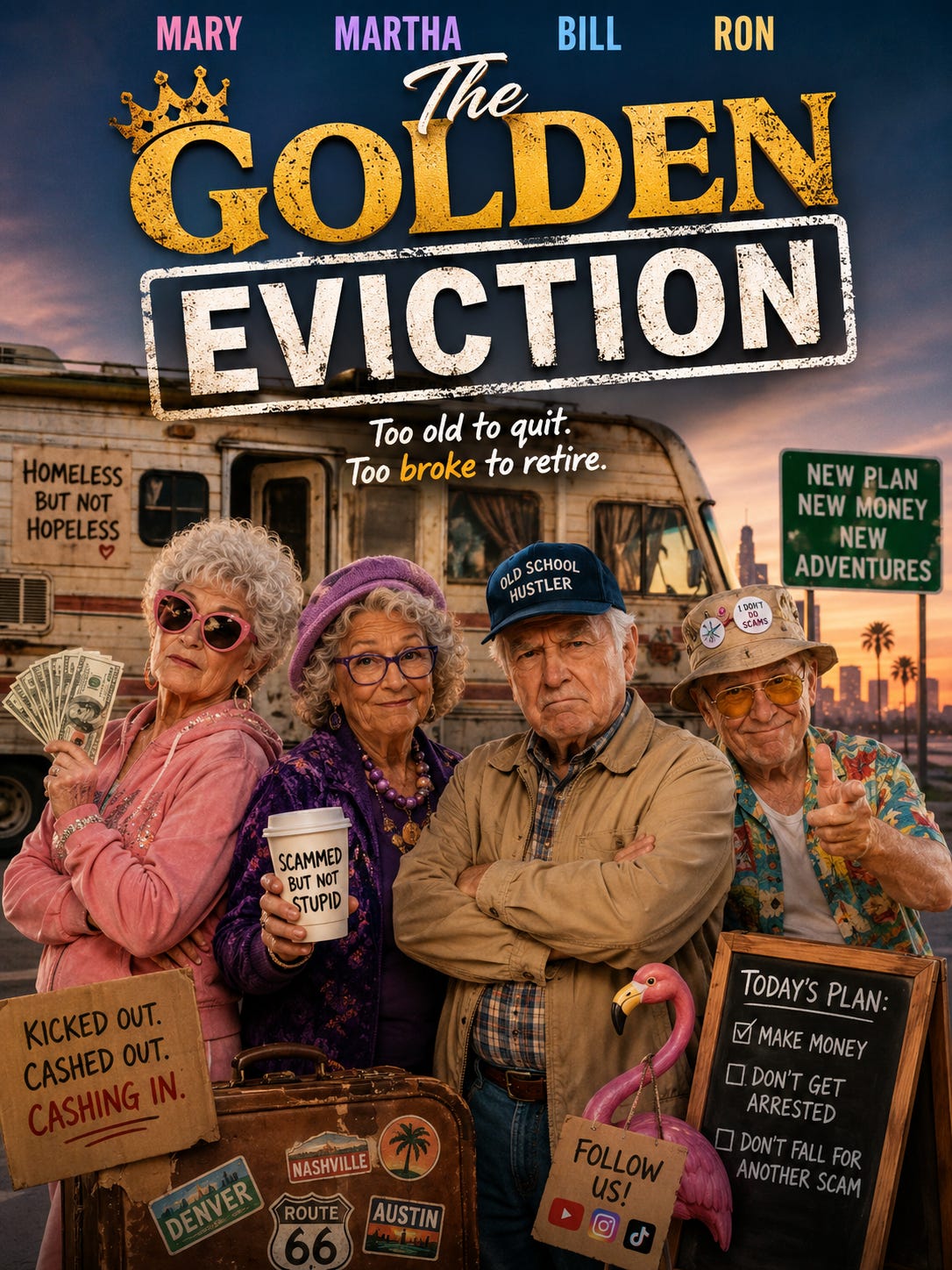
Golden people in an old folks’ home where they get kicked out because they fall for too many online scams. And they get all their money together to buy an RV, and they’re doing all these, like, side hustles and stuff…
After losing their life savings to a series of online scams, four retirees, Mary, Martha, Bill, and Ron are kicked out of their account. With nowhere else to go, an unlikely group pulls their remaining money and buys a beat-up RV, determined to prove that their lives aren’t over, just because their bank accounts are empty.
As they travel across country searching for a fresh start, they stumble into one outrageous money-making scheme after another, so… Four main characters, and then they do, like, rideshare apps. etc. Like, they’re influencers… They can’t do any of it right. So we’re rooting for them, and they continually fail.
Head to Head:
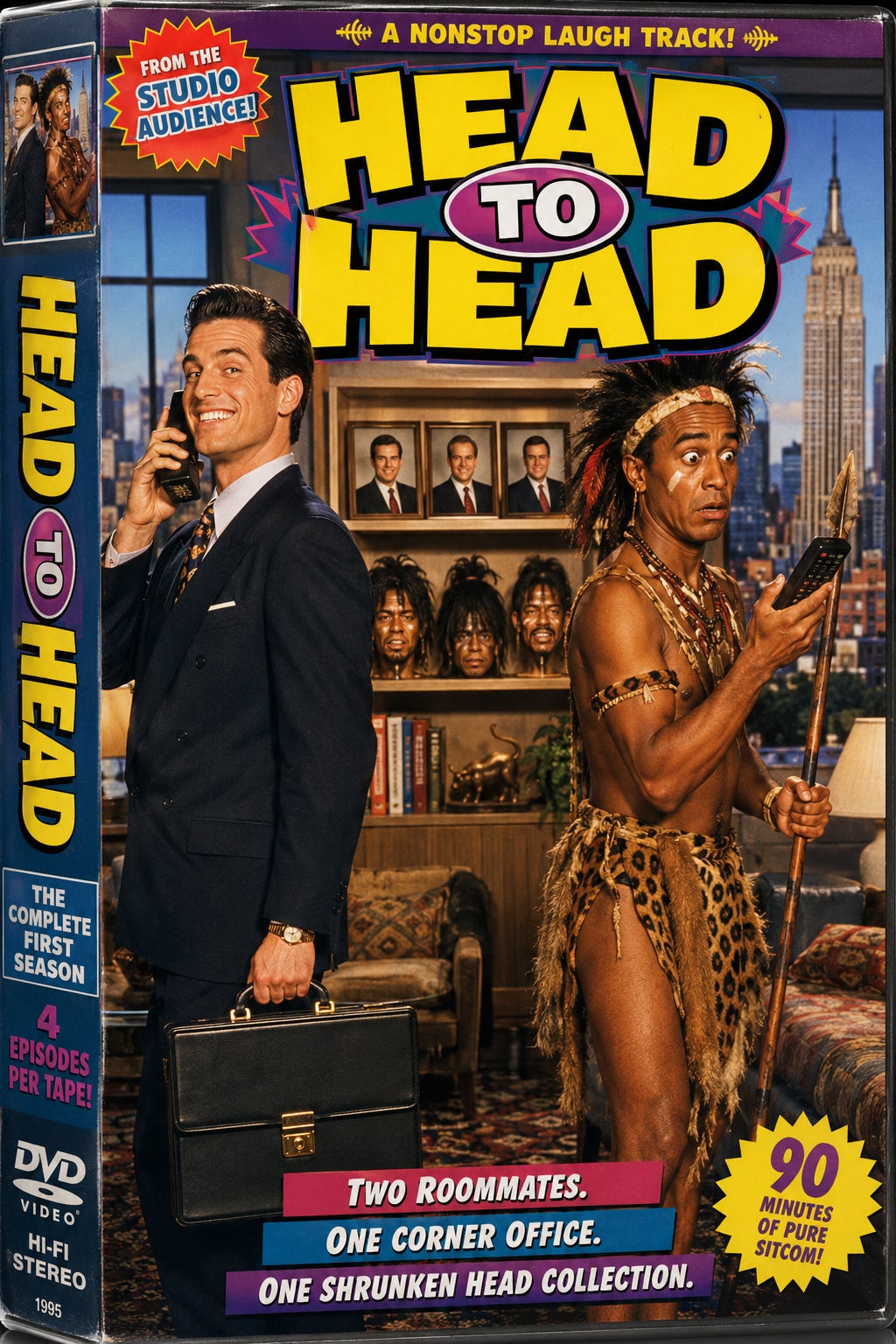
When uptight corporate recruiter Chad Whitmore needs a new roommate to cover rent, he ends up with Koko, a displaced jungle tribesman with an ancient family trade — and a duffel bag full of trophies. By day, Chad’s hunting down Fortune 500 executives while Koko navigates microwave ovens, HR departments, and the baffling concept of a “LinkedIn profile.” By night, they’re somehow the best roommates either of them never asked for. One’s trying to land the perfect candidate. The other is the perfect candidate — for a restraining order.
The Vintage:
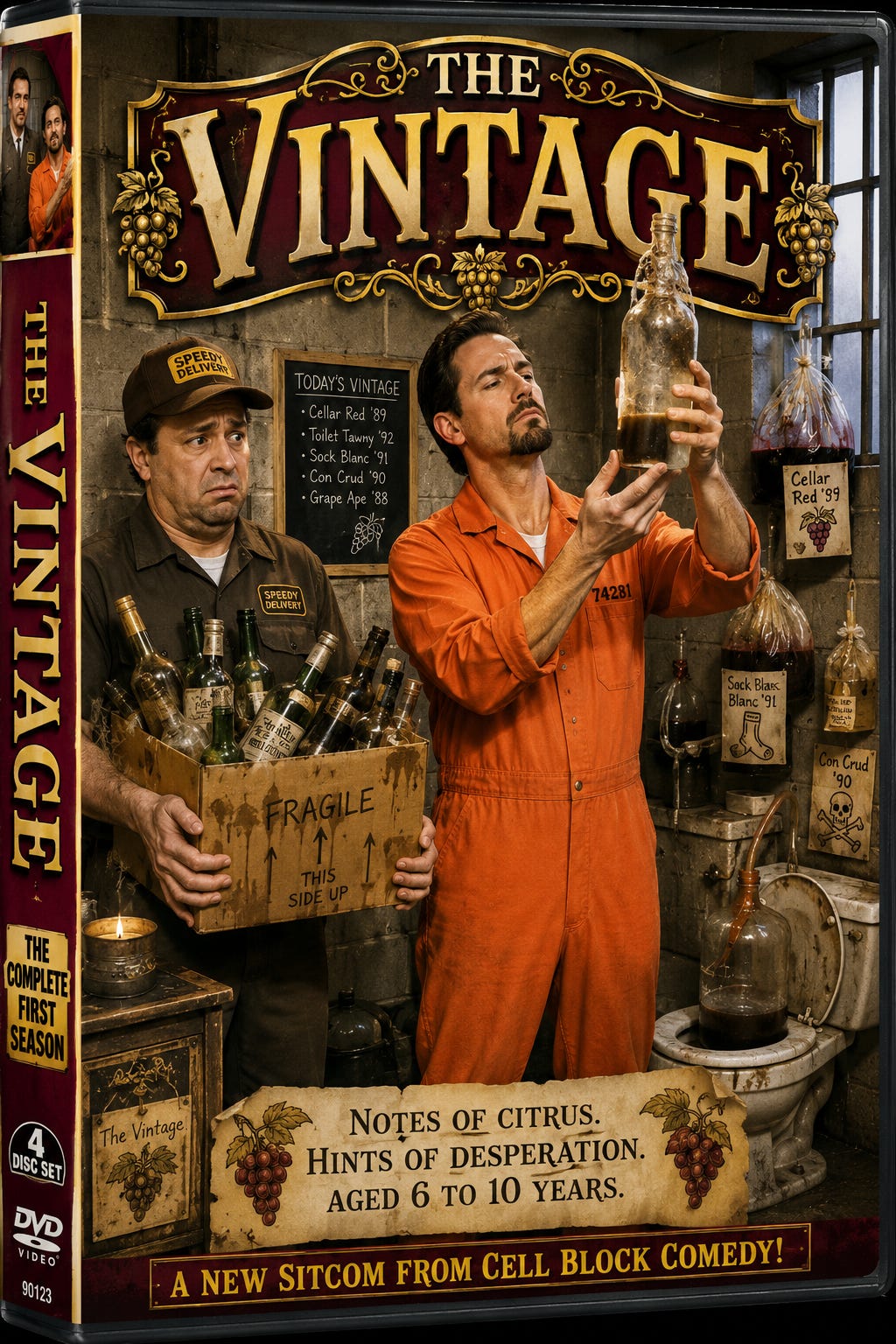
Marcel Dumont didn’t choose prison — but prison chose his calling. A self-declared artisan vintner operating out of Cell Block D, Marcel has transformed the humble toilet wine hustle into what he insists is a thriving boutique operation. With nothing but smuggled fruit, contraband sugar, a hand-sewn fermentation sock, and unshakeable conviction, Marcel crafts what he calls “expressions of incarcerated terroir.” His business partner on the outside is Denny, a schlubby delivery driver who just wanted a side hustle and now finds himself smuggling bottles of lukewarm mystery wine to surprisingly enthusiastic online customers who think it’s artisanal craft booze. Every episode is a new vintage. Every vintage is a new catastrophe. The reviews are inexplicably mixed.
The Loophole:
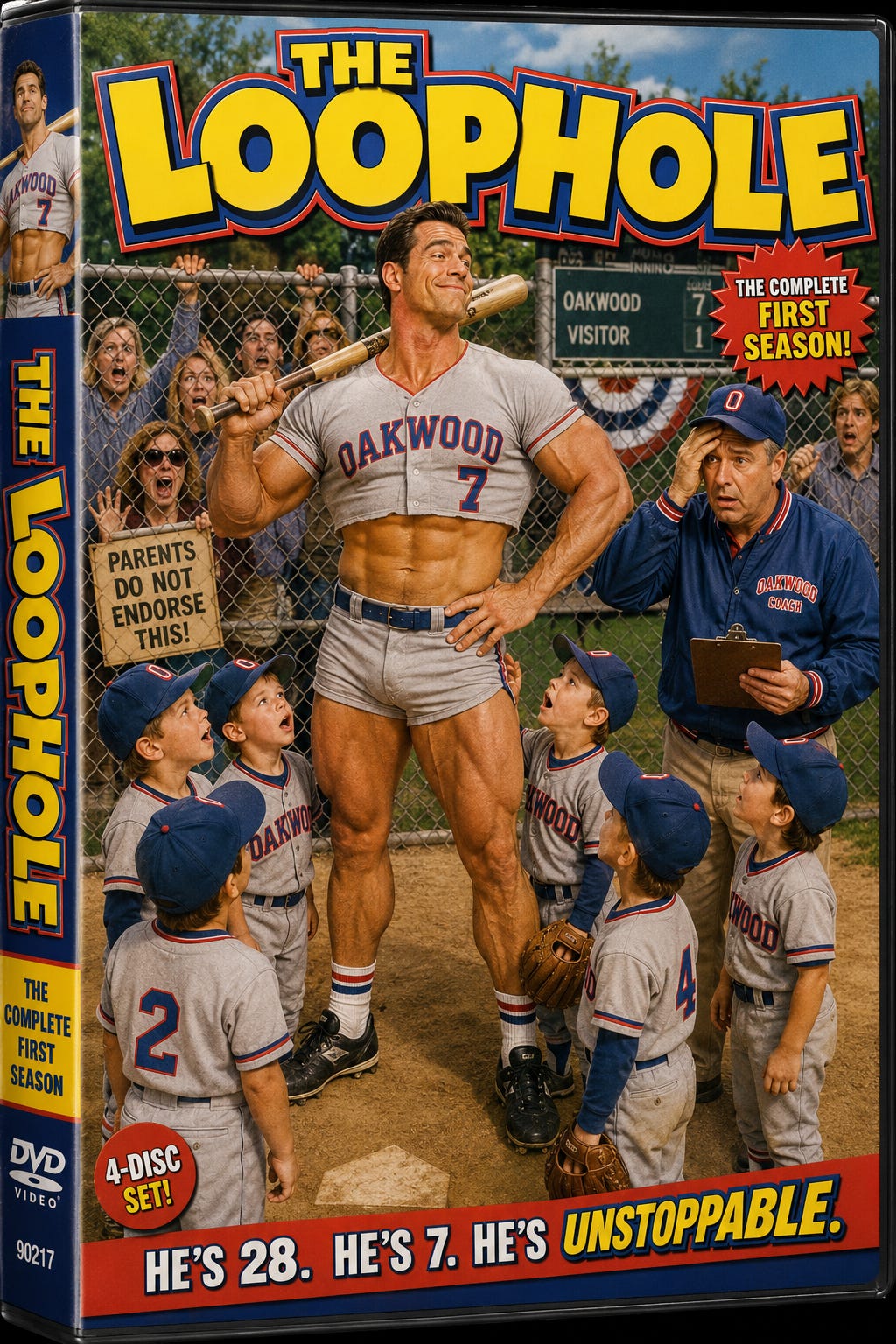
When the MLB’s legal team unearths an obscure 1887 bylaw stipulating that a player’s official age is determined by the number of times their birthday has actually occurred, star shortstop Brick Calloway — born February 29th, 1996 — is ruled to be officially 7 years old and immediately voided from his contract. Rather than fight it, Brick does what any rational adult professional athlete would do: he signs with the Tri-County Mudcats, a little league team that hasn’t won a game in four seasons. Now Brick is navigating juice boxes on the bench, a well-meaning coach who has absolutely no authority over him, parents who are deeply alarmed, and a league commissioner who can’t find a single rule that says he has to stop. The Mudcats are finally winning. Nobody is happy about it.


